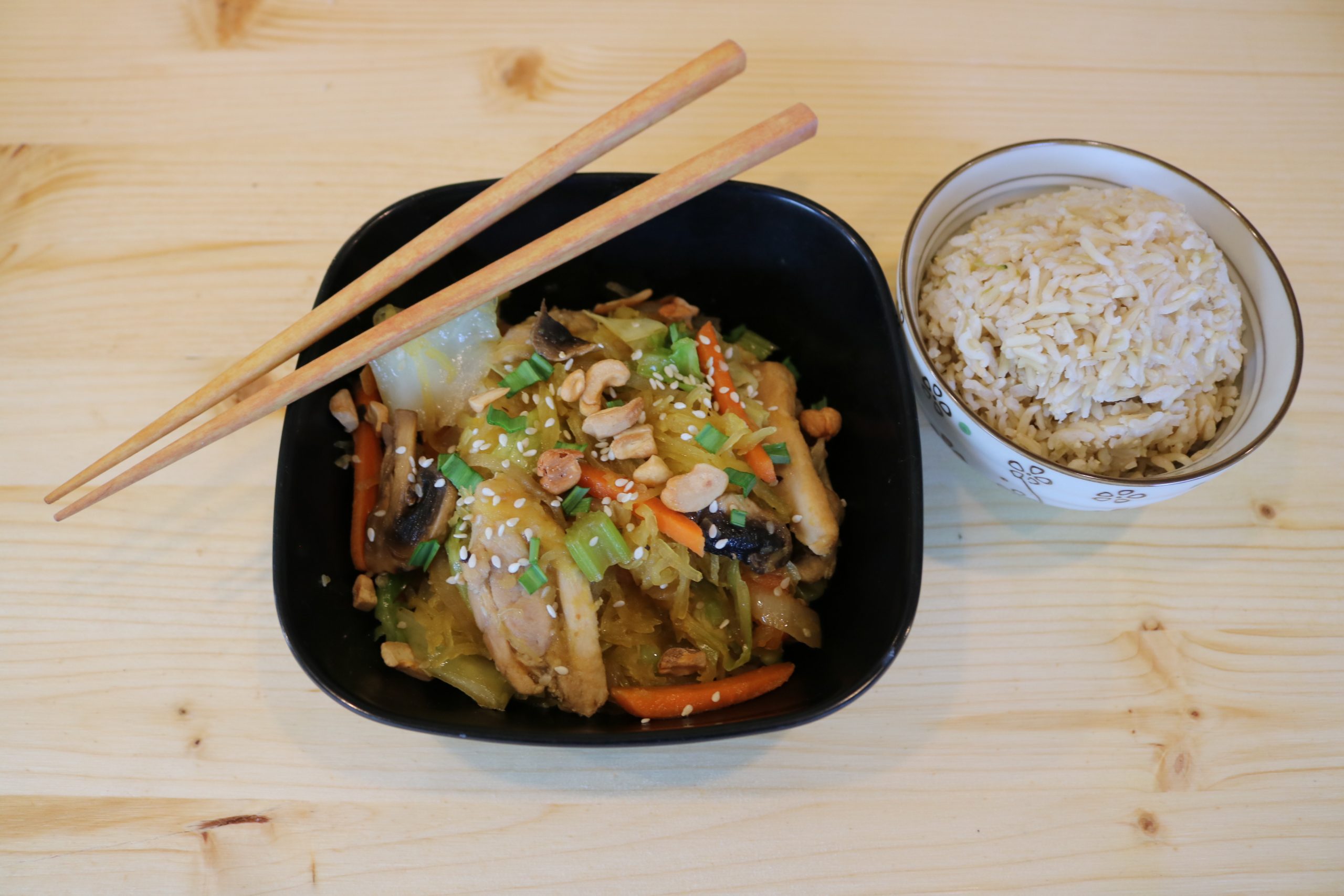
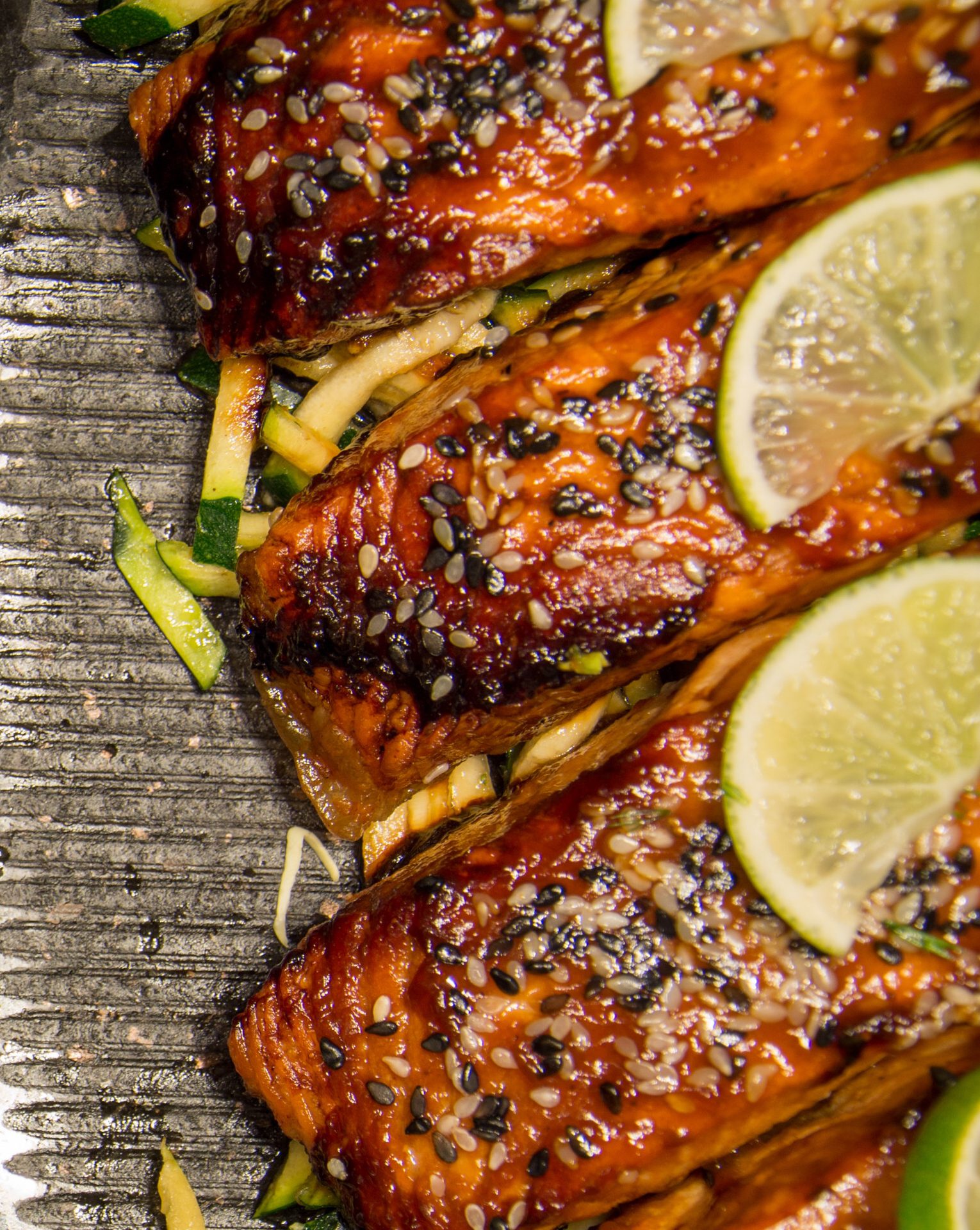
Japchae (pronounced jap-chay) is a savory, umami Korean noodle dish I always get whenever I visit a local Korean day spa. It is one of my favorite things to eat and always conjures feelings of healthy, relaxed self care for me. 🙂 Typically, japchae is made with sweet potato glass noodles (you should definitely try it that way also!) but I’ve made this spaghetti squash version because I have piles of spaghetti squash in my winter food storage left over from my summer garden.
It’s also a great dish to practice your chopstickin’ skills on! Enjoy – and let me know in the comments if you tried japchae for the first (or 50th) time!
Japchae-Inspired Spaghetti Squash
Japchae is a delicious, umami Korean dish typically made with sweet potato glass noodles. This spaghetti-squash version is a great seasonal option since spaghetti squash stores great throughout the winter. Serve with a scoop of brown or white rice and enjoy!
1/2 large spaghetti squash
3 stalks celery (chopped)
3 carrots (cut into thin strips)
4 garlic cloves (minced)
1 medium onion (sliced thinly)
3-4 mushrooms (sliced)
1/2 head cabbage (shredded)
3 chicken thighs (sliced)
1/4 cup low-sodium soy sauce
2 Tbsp brown sugar
3 Tbsp sesame oil
2 tsp sesame seeds
sesame seeds, green onions, cashews (optional – for garnish)
Carefully slice spaghetti squash in half and scrape seeds and pulp. Place half in a microwave for 15 minutes.
While squash is heating, mince garlic and slice onions, carrots, celery, mushrooms, cabbage, and chicken.
In a heated skillet over medium-high heat, brown chicken pieces on all sides.
When cooked through, add garlic, onions, and celery. Cook for 2-3 minutes until onions begin to be translucent.
Add carrots, cabbage, and mushrooms, and gently stir fry until cabbage is softened.
Add soy sauce, brown sugar, sesame oil, and sesame seeds. Stir until mixed through.
Remove cooked spaghetti squash from microwave with a towel or pot holder (it will be very hot). Place paper towels or a kitchen towel on the spaghetti squash and press the extra water from the squash.
Use a fork to scrape the spaghetti squash strands into the skillet with the rest of your ingredients. Stir to combine.
Optional: garnish with sesame seeds, chopped green onions, and cashews
This recipe may contain too much sodium if you are on a low-sodium diet. To reduce the sodium by about half, exchange the soy sauce for coconut aminos.
1 serving contains 271 calories, 14.3 g protein, 22 g carb, 15.8 g fat, 742 mg sodium, 123% DV of vitamin A, 44% DV of vitamin C, and 33% DV vitamin K.
This creamy, delectable macaroni and cheese is the definition of comfort food. In an epic stroke of blended brilliance, this one-dish meal brings you lean protein, a mondo-dose of calcium and vitamin A, a full serving of vegetables, complex carbohydrates for sustainable energy, and all the cozy, cheesy winter vibes you could desire. The sauce contains an entire butternut squash and a cauliflower to boost the nutritional impact of this otherwise unassuming kid-friendly dinner.
An immersion blender can be a very helpful tool to make this recipe prep a snap, but it’s not necessary. You can use a regular blender, food processor, or even a potato masher (though the blend-ier options will get you a smoother sauce). To save time, you can also purchase the butternut squash and cauliflower already cubed (fresh or frozen).
Let me know in the comments if you give this recipe a try!
Veggie-Loaded Macaroni & Cheese
This creamy, delectable macaroni and cheese dish is the definition of a comfort food. Plus, each serving includes lean protein, vegetables, healthy complex carbs, and a mondo dose each of calcium and vitamin A.
1 whole butternut squash
1 head cauliflower
1 1/2 cups brown rice macaroni (sub any whole grain or legume-based pasta if desired)
1 cup shredded cheddar cheese
1 block reduced fat cream cheese (8 ounces)
2-3 Tbsp low fat milk
1/2 tsp paprika
1/2 tsp turmeric
1 tsp garlic powder
1 tsp onion powder
1 tsp salt
1/4 tsp ground black pepper
2 c diced ham
Place a large pot of water on high heat to boil (include a strainer basket if you have one).
Roughly chop cauliflower into large florets. Peel and cube butternut squash.
When water is boiling, add butternut and squash and boil until fork tender, about 8-10 minutes.
While vegetables are boiling, shred cheese.
Strain vegetables from boiling water and add macaroni to same water. Cook according to package directions.
Note: this adds flavor and nutrition to the noodles, but to save time, you can cook macaroni in a separate pot at the same time as the vegetables.
While macaroni is cooking, place squash and cauliflower in a large casserole dish with cream cheese, cheddar cheese, milk, and seasonings. Using an immersion or stick blender, blend very thoroughly until sauce is smooth and creamy and there are no large pieces of vegetable remaining.
Note: If you do not have an immersion blender, perform this step in a regular blender or a food processor and add to casserole dish when done.
When macaroni is done cooking, drain and add noodles and ham to casserole dish with sauce. Stir until well combined.
1 serving contains: 352 calories, 20 g protein, 33 g carbohydrate, 15 g fat, 1026 mg sodium, 8.7 g saturated fat, 6.3 g fiber. It meets 25% daily RDA for fiber, 10% for iron, 26% for calcium, 27% for potassium, and 84% for vitamin C, based on a 2000 calorie per day diet.
Health notes: This recipe contains a higher sodium level than may support heart health with certain conditions. To reduce the sodium, cut the salt to 1/2 tsp and try chicken or chopped Canadian bacon in place of the ham.
Disclaimer: Products purchased through affiliate links will earn me a small commission at no extra cost to you. Please know that I only recommend products that I have used and believe in.
It’s New Year’s and the fad diets and crazy exercise trends abound. Use these tips to avoid the over-restrictive trendy madness and still make some healthy changes that might actually make it to next New year!
Of course you want to be healthy – but everywhere you look, diet culture’s miserable mandates run wild. How are you to know what healthy really looks like? Look no further.
Down Home Dietitian’s got you covered – with simple healthy recipes, informative videos, totally doable workouts, and grow-it-yourself gardening advice. If you want to be healthy and you don’t want to be miserable doing it, this is the channel for you. Subscribe so you don’t miss a thing! Because healthy doesn’t have to be hard.
Your mental and emotional health are just as important as your physical health – possibly more! Being mentally healthy makes it much easier to stay regularly active and choose healthful and nutritious foods. Exercise is a wonderful and necessary thing to keep your body feeling well and maintaining muscle tone; however, there are so many more beautiful things about exercising. Don’t fall into the trap of thinking that exercise is only good for “staying trim” or losing weight, and definitely don’t berate someone who is physically slim for exercising. Do you know how many times I’ve heard, “why do you exercise? You’re already skinny!”
The benefits of physical activity and exercise go far beyond the physical aesthetic. In fact, that’s one of the least important aspects of exercise. That “skinny exerciser” may use her regular workout as a way to stave off crippling fatigue or anxiety. Exercise is particularly great for a whole spectrum of areas of emotional and mental health. Particularly right now, as so many of us are struggling with extra stress and irregular routines, you can find some healing in physical activity.
Find Community
Physical exercise can encourage socialization. Even solitary, non-competitive sports like running can be done in groups, and many people find this helps motivate them – not to mention it’s more fun. Finding a community within your sport which helps connect you to the sport and to others on a deeper level is amazing. Exercising in a group can make you feel like you’re part of something – this in itself is a great thing for your mind and body alike.
Stave off Depression and Anxiety
Exercise is fantastic for mental wellbeing. The science is all there – human beings are designed for movement, mobility, and activity. We thrive on being able to run, walk, jump, climb, swim and exert our muscles. Even if hardcore exercise isn’t for you, simple stretching or less intense sports such as walking and gentle swimming can release endorphins in your brain and give you an incredible feeling. Give activity the chance to help you feel as renewed and refreshed as you deserve.
Try Something New and Promote Brain Function
Trying a new activity is great for both your mind and your body. If you love sports and practice your favorite sport regularly, you might be tempted just to stick with what you know. However, trying cost-effective new activities which require learning a new skill, such as hand-eye coordination, helps your mind adapt, stretch and overcome new challenges. This is highly beneficial for your development, and has been strongly connected with lower occurrence of cognitive conditions such as Alzheimer’s or dementia. Stuck on what to try? Check out this list of options:
Pickleball – Pickleball is a mixture of tennis and badminton, and requires a teammate. All you need is a buddy, a paddle, and a whiffleball. While you’re at it, pick you up some court shoes for pickleball. My mom’s been playing pickleball at her local gym for a few years and I’ve joined her a few times. It’s a great workout and a ton of fun!
Pilates – Mostly mat work, pilates is great for low-impact strengthening work for core and back stability, as well as lower body strengthening. It is an excellent way to stabilize joints and prevent back pain.
Rock Climbing – If you have a local gym with a climbing wall, give it a go! There are few equivalent exercises for functional upper body work. The key, though, is to work on using your lower body whenever possible so you can climb for more than a few minutes before your arms give out!
Dancing – It doesn’t matter if you don’t feel like dancing in front of others, you can try hip hop, Latin, or cardio dance from the comfort of your living room with free Youtube dance workouts. Who cares how you look? Just move and have fun!
Martial Arts – From Tai Chi to Muy Thai and everything in between, martial arts have so many benefits: balance, flexibility, discipline, and self-defense skills.
There are so many more ways to stay active, you’d be surprised! I even had a client recently who participates in arm wrestling competitions! Whatever you think you might be interested in, there’s a group of people out there doing it. If you haven’t find your “thing” yet, don’t give up. Your mental health (not to mention the physical health benefits) is worth the journey to find an activity you’ll enjoy doing long-term. Keep at it!
One of the great joys of being a dietitian is dispelling wellness-related myths. These bits of misinformation make people feel as though being healthy is unattainable, unrealistic, or downright impossible. Not to mention miserable! What is the point of being healthy if you’re living a miserable, restricted life? In the end, constantly hearing these myths leaves people feeling trapped! If they can’t meet these strict (and let’s face it, no fun) standards, then why even try to be healthier?
This list includes the wellness-related myths I hear most frequently from clients. I love to talk these through with my clients, explain what is actually true, and help them find realistic, healthy lifestyles they truly enjoy. Hopefully some of these explanations will give you a giggle and who knows? Maybe they’ll empower you to rock a healthy life you enjoy.
1. Carbs are bad for you and cause weight gain
This is probably the big kahuna and the myth I most frequently hear. Most of this is just couched in misunderstanding of what carbohydrates are and what they do in your body. Carbs are any food that breaks down into blood sugar. For some reason, society has collectively decided that blood sugar is evil. In fact, blood sugar is the fuel that our bodies use for energy. The truth is, if we undereat carbs, we are underfueling our brains and bodies. Often that underfueling leads to brain fog, slowed metabolism, low energy, depression, and/or anxiety. Also sadness, because carbohydrates are delicious. The metabolic effects of low carb diets lead people to gain more weight afterward than they ever lost in the first place, and that restriction is tough on our relationships with food. The solution is not to eat low carb.
Carbs themselves are not the problem. Overeating carbs, just like overeating in general, can lead to weight gain. The reason carbs get such a bad rap is because they are so easy to overeat. They are shelf stable, tasty, and not very filling. It is completely possible to regulate weight and blood sugar while including several portions of carb-containing foods per day. The key is to balance those carb foods with more filling foods like protein, healthy fats, and fiber to keep you full and fueled without weight gain.
2. Salad is pointless if you put toppings on it
Or any other incarnation of this statement – what’s the point of a healthy dinner if you eat dessert? Why bother ordering a water to drink with your burger and fries? Umm…because they are healthy options. Why not choose them? Having something that’s higher calorie or less “perfect” to eat does not eliminate the nutrition of something you eat with it. Adding croutons and dressing does not vacuum the vitamin K out of your greens or the fiber out of your snap peas. Eating dessert does not neutralize the healthy nutrients from your balanced dinner. The burger and fries do not somehow make healthful hydration irrelevant. Honestly, I would rather someone eat veggies with some butter or salad dressing than not eat veggies at all!
I frequently encourage my clients to prioritize the foods they love and make healthful changes in areas that they don’t hold as dear. Don’t discourage others (or yourself) from making the healthful choices that you prefer and choosing the delicious foods you enjoy. These are perfect examples of balance.
3. Fruit has too much sugar (carrots too)
This one is an offshoot of #1. Fear of carbs = fear of sugar. Most fruits and vegetables have some naturally-occurring sugars. Some believe they are to be avoided, primarily out of fear they will cause weight gain or blood sugar spikes. The good news is that the amounts of carbs and sugar in a serving of these foods is completely appropriate and does not cause these problems for most people. For example, most people need 30-60 grams of carbohydrate per meal, and 1/2 cup of most fruits contains 7-15 grams. One cup of carrots contains about 10 grams. You’d have to eat a LOT of carrots to exceed your carb needs – most people don’t have that problem!
On top of that, fruits and vegetables tend to have a built-in blood sugar buffer – fiber! Fiber has a complex structure that slows digestion and helps carbohydrates go into the blood stream at a much slower rate. That helps prevent blood sugar spikes and fat storage. Fear of sugar is no reason to pass up the vitamin and mineral benefits fruit has to offer. The take-home message: don’t fear fruit!
4. Fitness “doesn’t count” if you aren’t sweating
This one really torques me off. I recently had a sedentary client with chronic pain whose doctor told her that her newly established walking habit didn’t “count” because she wasn’t sweating for 30 minutes, 5 days per week. She came to me feeling so defeated (despite the fact that in two weeks she had worked up from 5 to 15 minutes of walking and had lost 7 lbs)! This isn’t the first case I’ve seen where people feel that because of their pain or fitness limitations that there’s “no point” to exercising. Even small bouts of movement carry myriads of benefits! Plus, when you haven’t been exercising regularly, your body is not efficient with movement and burns more calories doing less activity. As you gradually work up to more time or intensity, you adjust to your body’s needs. It’s a well-designed system. 🙂
5. Eggs are bad for you
Ahh the great misunderstanding of the 1990s. It’s pretty cut-and-dried at this point: egg yolks have a lot of cholesterol. We used to think eating cholesterol would raise our blood cholesterol. Turns out it doesn’t! Plus, eggs are a great complete protein source. Scramble away!
6. Eating “clean” and the all-or-nothing mentality
What does “eating clean” even mean? And how subjective a term is that anyway? Terms like that have formed this idea that being healthy is a wagon that you are either on or you’re off. This is SUCH a damaging mindset because it sets us up completely to fail. If we expect that we’re going to eat perfectly and completely eliminate anything with sugar or with flour or whatever the “clean eating trend” of the minute is, we’re liable to “fail.” I say fail with quotes because it is not a failure to eat tasty food. Plan to include all kinds of foods. Plan not to exercise every single day. That way, you can just continue on without guilt for eating a completely reasonable treat or taking a day off to lay around.
Somewhere along the line came the idea that if protein is good for you, more protein must be better. More protein, more protein, more protein. Whether your goals are weight management or muscle gain, there’s someone out there who will push protein on you like it will be the magic wand to solve all your problems. Some bodybuilding blogs and forums recommend that those who weight lift regularly should eat 2 grams of protein per pound of body weight! Meaning, a 150-lb woman should eat 300 grams of protein per day. A deck of cards size of meat contains approximately 20-25 grams protein. Can you imagine eating that 12 times over…every day??? A 180-lb man would be aiming for 360 grams protein per day! Nuts!
For satisfaction, weight management, and muscle maintenance, you need much, much less than that. Studies show that you can maximize muscle gain/maintenance with 30 grams protein in a sitting.1-2 Any more than that and the extra protein gets filtered out by your kidneys. Basically, you’ve got really expensive pee and a lot of extra kidney stress.
8. Healthy food is more expensive
This one may not be as directly obvious, but it comes down to satisfaction and nourishment. 10 cents per ramen brick is pretty dang cheap, but how long does that sustain us? With very little protein, fiber, or healthy fat, most will find themselves hungry again in a short while, as is the case with a lot of the more processed foods. Nourishing whole foods like produce, lean proteins, and healthy fats may be more expensive, but will meet our nutritional needs and satisfy hunger for much longer than cheaper foods. If planned well, you can spend very reasonable amounts on healthful meals. Here is the first in a series I wrote about eating well on a budget, and how I feed our family of four on $100 per week. You can eat well on a budget!
9. Dietitians eat perfectly
It seems that everyone believes dietitians eat only organic sprouted raw cardboard – forget it! We are normal people who love ice cream and chips and cookies, as well as a delicious serving of roasted veggies or a great smoothie. Health is about balance, not restriction! Check out my series on what dietitians eat in a day here, here, and here!
Diet culture is determined to tell you that you have to be miserable to be healthy.
That couldn’t be more wrong.
Subscribe to learn how to go from a frustrated, restricted dieter to a happy, relaxed relationship with food and fitness. Healthy doesn’t have to be hard!