Sometimes life gets in the way of meeting the goals we want to meet…some things don’t seem realistic in the moment, but that doesn’t mean you should let the time pass you by! Learn something new, take a baby step, or build on your basics. Just keep moving forward!
To round out this series on fitness for backpacking, I thought I would offer you a little bonus post on nutrition for the trail.
Good choices for trail foods are:
lightweight
do not require refrigeration
are nutrient dense
may or may not require cooking – while either can work if you bring a stove, this is a factor to consider!
Some of the parameters you might look for in your day-to-day food might be a bit different when hiking or backpacking. Your needs for calories, carbohydrates, and sodium are higher when you are active (especially if you’re carrying a pack). Don’t worry if some of the foods you eat are higher in these nutrients than what you normally eat. Here is a list of ideas for meals and snacks while hiking or backpacking:
Breakfast
Oatmeal – Portion oatmeal, dried fruits, protein powder, cinnamon, and brown sugar into individual packets or zipper plastic bags.
Breakfast bars – Homemade or store-bought bars that contain whole-grain carbohydrates and protein can be great options. Oats, nuts, seeds, honey, and dried fruits are all good potential ingredients. Here is a recipe for homemade breakfast bars that I’ve made before and enjoyed!
Instant Breakfast Packets – While these are probably not sufficient by themselves to prep you for a day of hiking, you can mix these packets into your oatmeal, coffee, or water for some added carbohydrate and protein.
Lunch
Wraps – Whole-grain tortillas with peanut butter and a banana or a pouch of chicken with spinach are easy to whip out for a quick lunch break.
Hummus “plate” – Depending on how long you’re hiking, you can sometimes get away with some crunchier veggies (carrots, broccoli, cauliflower) in your bag for a day or two. Toss in some pita bread and a container of hummus and you’ve got a nutritious and delicious no-cook meal.
Dinner
Pasta- Particularly if you’ve hiked all day, do not fear the carbohydrates! Pouches of pasta sides are convenient and easily cooked with a camp stove. Add a packet of chicken or tuna or some slices of summer sausage for protein, and toss in some dehydrated veggies.
Beans and rice – Find a mix of rice and beans to which you can add some dry ranch dressing or onion soup mix and some dehydrated veggies. Boil it up!
Freeze-dried backpacking meals – These guys can be super-light and very convenient, but sometimes expensive. Watch to make sure they have the right amount of calories, carbohydrates, and protein for you after a long day on the trail. Unless you’ve been sweating a lot throughout the day, aim to keep the sodium under 40% DV.
Snacks
Dried fruits – These make excellent snacks, loaded with carbohydrates for energy and are quite light with all of the water dehydrated from them. Try dried peaches, strawberries, kiwis, or bananas.
Trail mix – Sorry to state the obvious, but this high-calorie, high nutrient density snack is really in its element in the out-of-doors.
Harvest Snaps – These crunchy puffed snacks made from peas, lentils, and other legumes have carbohydrate (important when hiking), protein, and a decent amount of fiber. Plus they are very light!
Whole grain crackers – Light and nutritious, these help provide necessary fiber and energy.
Jerky – Buy it or marinate and dehydrate some yourself.
Treats – Pack a little something to treat yourself after a long day of hoofing it! Choose individual packages of a favorite cookie or candy to enjoy around the campfire.
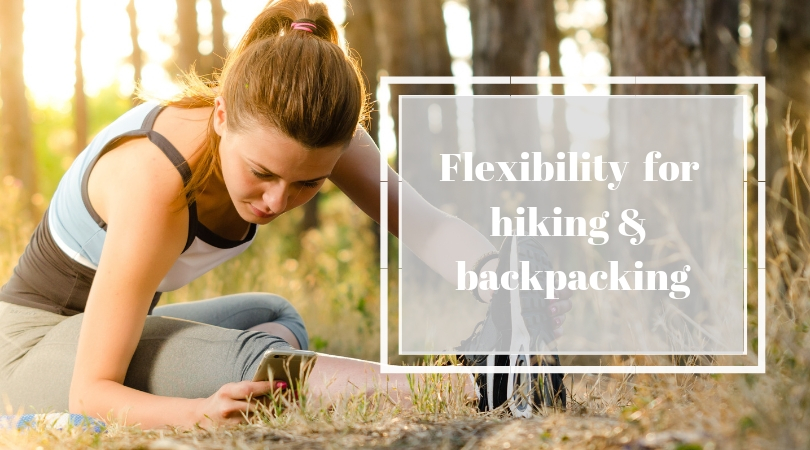
Are you getting excited to hit the trail yet? I know I am! Every sunny day gets me one day closer to our first backpacking trip! We’ve covered endurance and joint stability so far, and today we’re going to talk about flexibility. While by no means is it necessary to be gumby to enjoy a day on the trail, working on your flexibility can help you hike with less soreness and risk of injury. As an added bonus, performing these stretches after a day of hiking may prevent or lessen muscle tightness the following day.
The primary muscle groups that are going to benefit from increased flexibility in this case are: hip flexors (on the front of your hips), glutes (buttox), quads (thighs), hamstrings (the backs of your upper legs) and calves. If you are carrying a pack, we’ll toss in your upper and lower back, and pectorals (chest) as well.
I’ll show you 4 stretches that will catch each of these muscle groups. You want to hold each stretch for 30-60 seconds, 1-3 times a day. Press gently into the stretch until you feel tension but not pain. As you sit in the stretch, take deep breaths. You’ll often feel your muscles release some tension after 20-30 seconds and you’ll be able to go a little deeper without pain.
Hip Flexors, Quads, & Calves
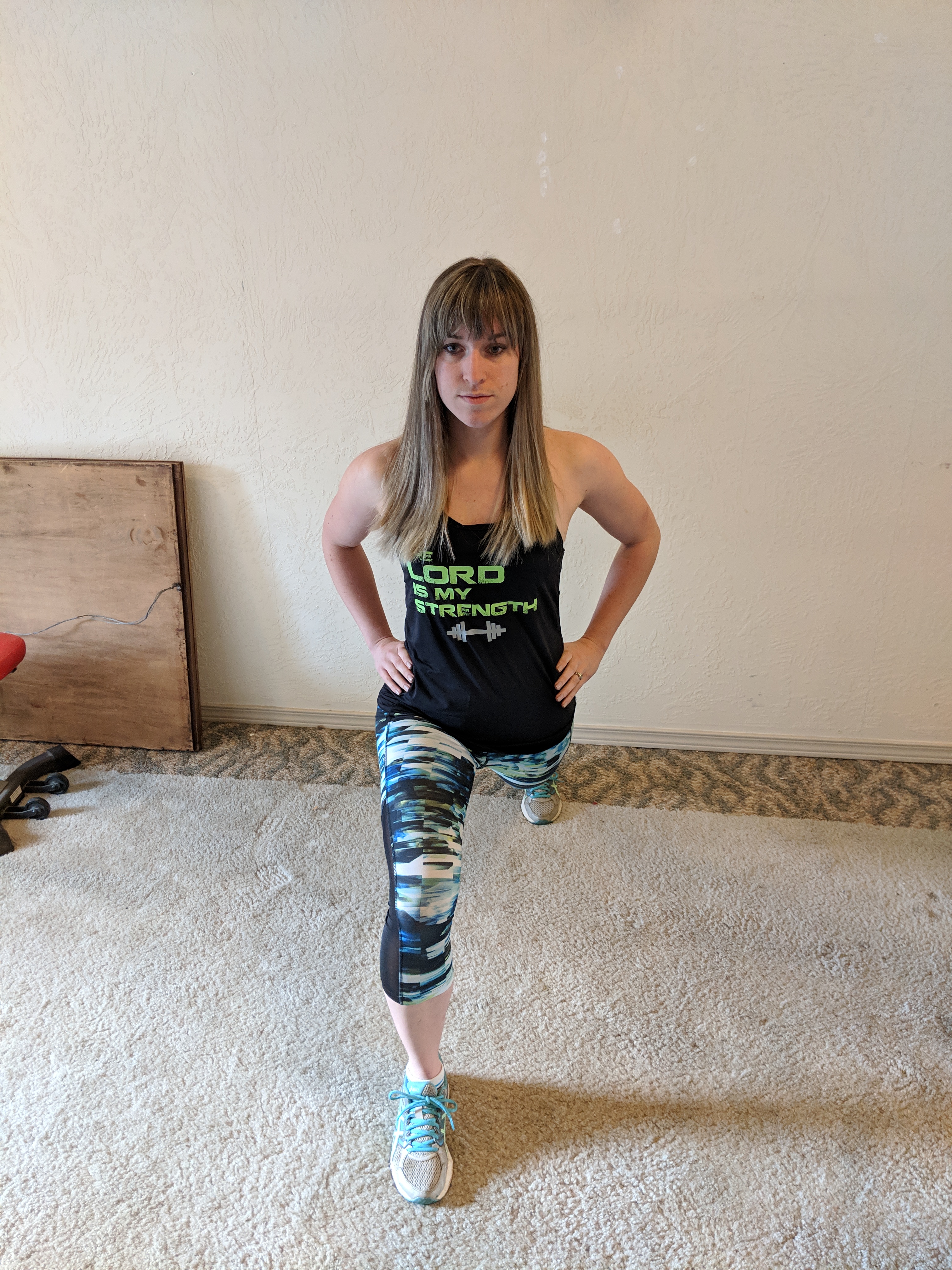
Stand with your feet hip width apart and place your hands on your hips or against a tree or wall for balance. Step your right leg forward into a lunge position. Bend your right knee, press your left hip forward. Keep your left leg as straight as you can and press your left heel toward the ground. You should feel this stretch in the front of your left hip, down into your left thigh, and in your left calf. Hold for 30-60 seconds. Repeat on the other side.
Hamstrings & Glutes
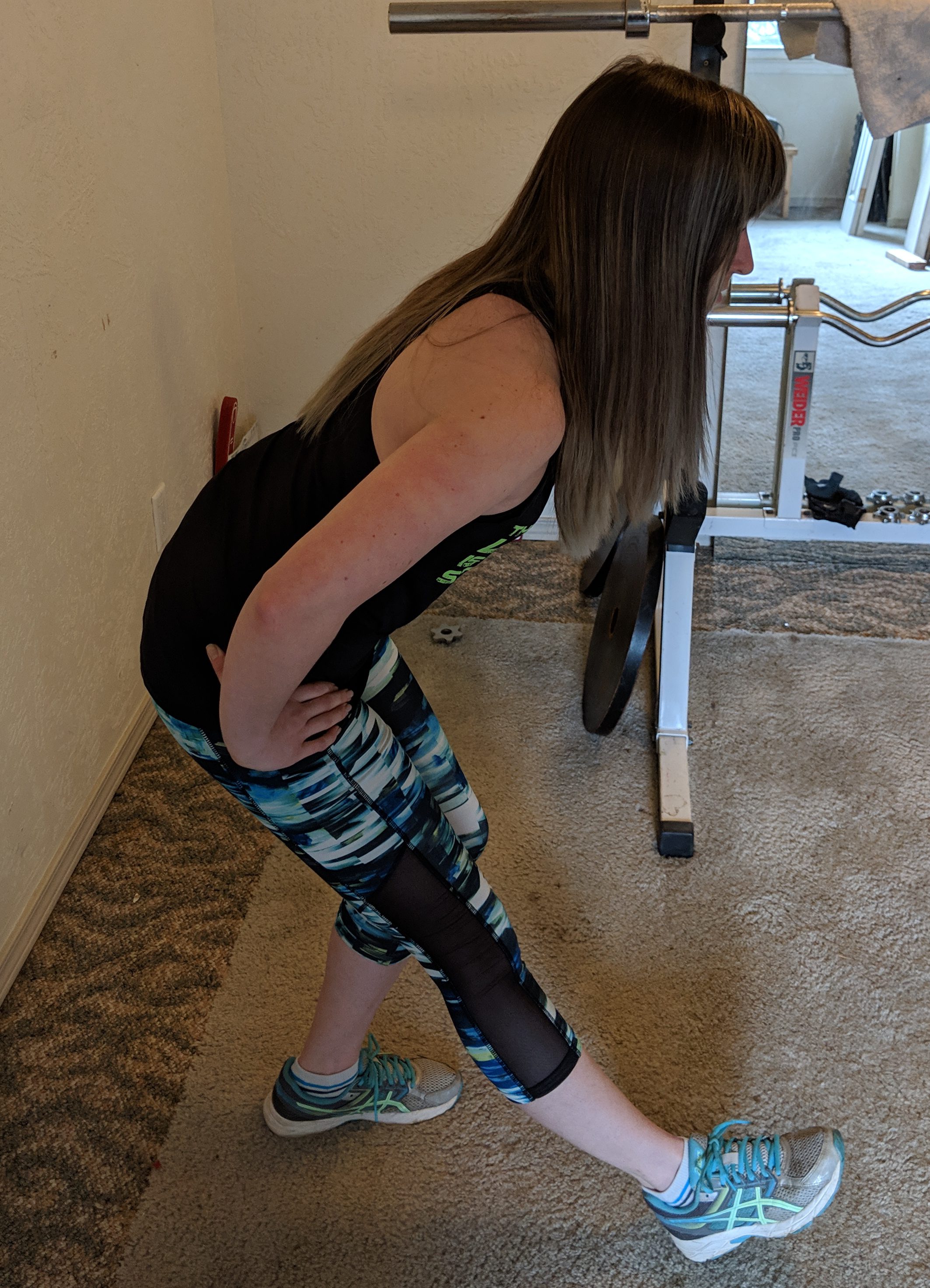
Stand with your feet hip width apart and place your hands on your hips or against a tree or wall for balance. Step forward with your right foot. Keeping your right heel on the ground, bend your left leg and shift your weight downward as if you were going to sit down. You should feel this stretch in the back of your right leg and in your right buttock. Hold for 30-60 seconds. Repeat on the other side.
Upper & Lower Back
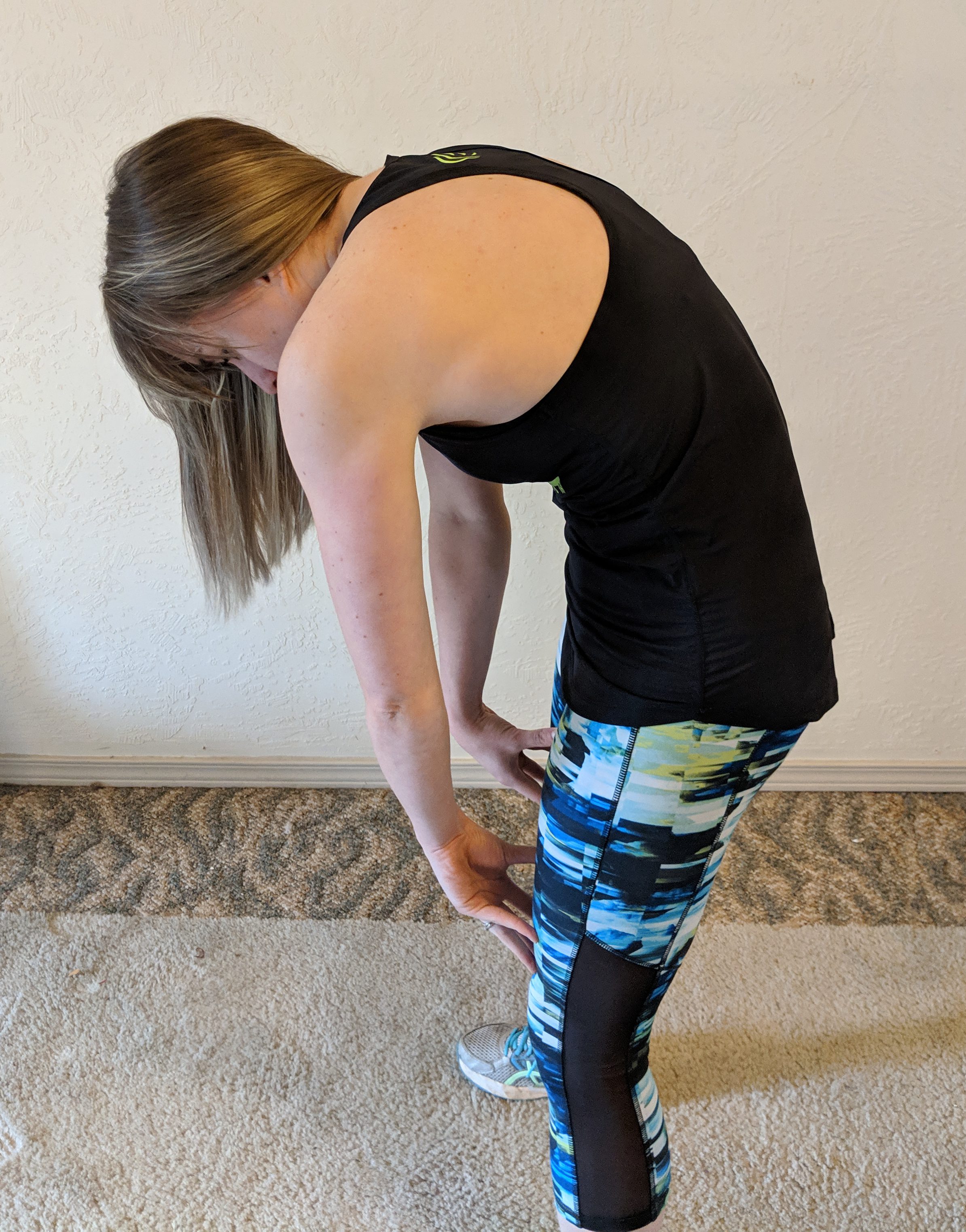
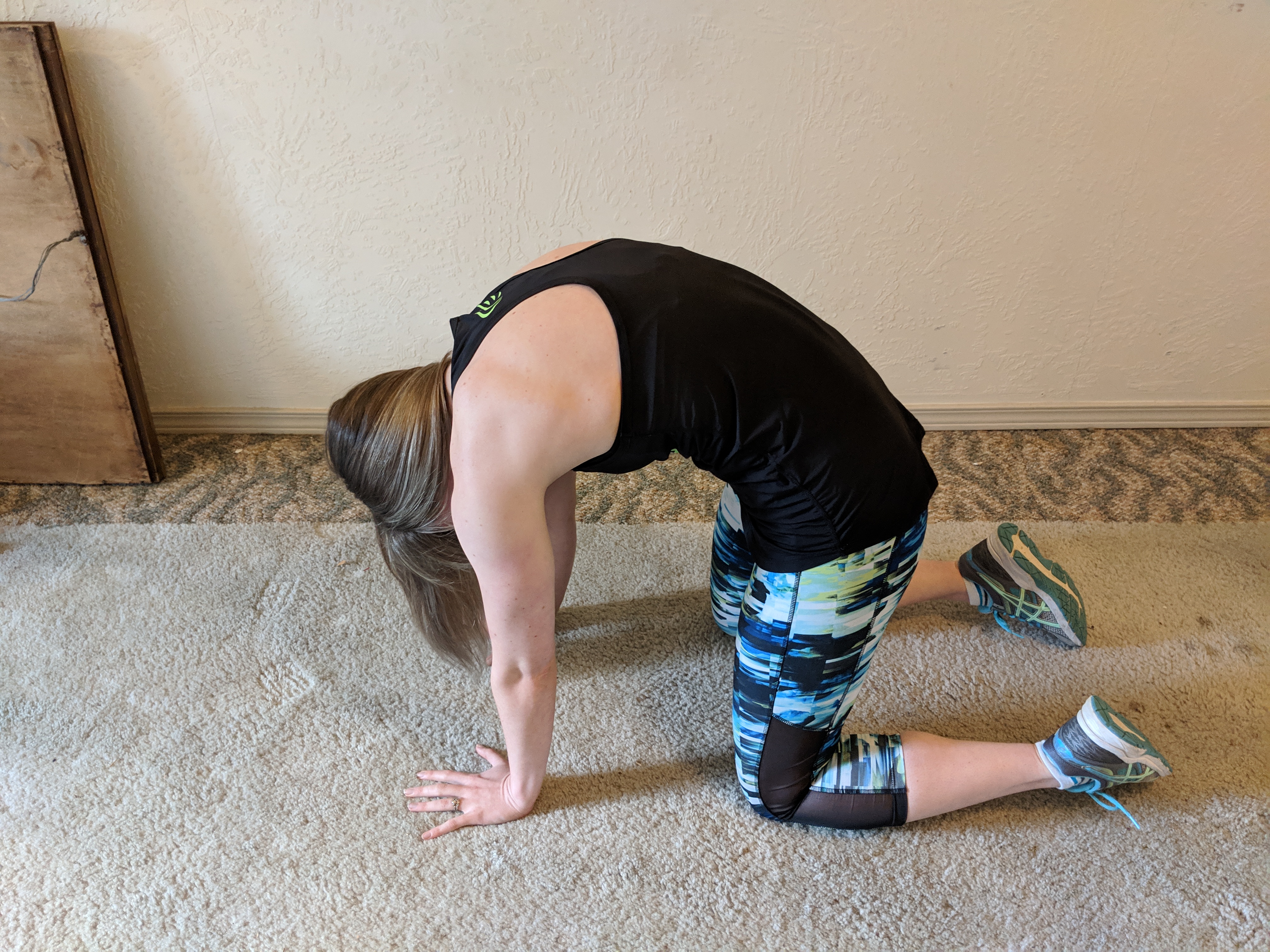
You can do this stretch standing or on all fours. Placing your hands on the ground or on your knees, pull your stomach muscles toward your spine and round your shoulders and back. You should feel this stretch in between your shoulder blades and around your spine. Hold this stretch for 30-60 seconds.
Chest
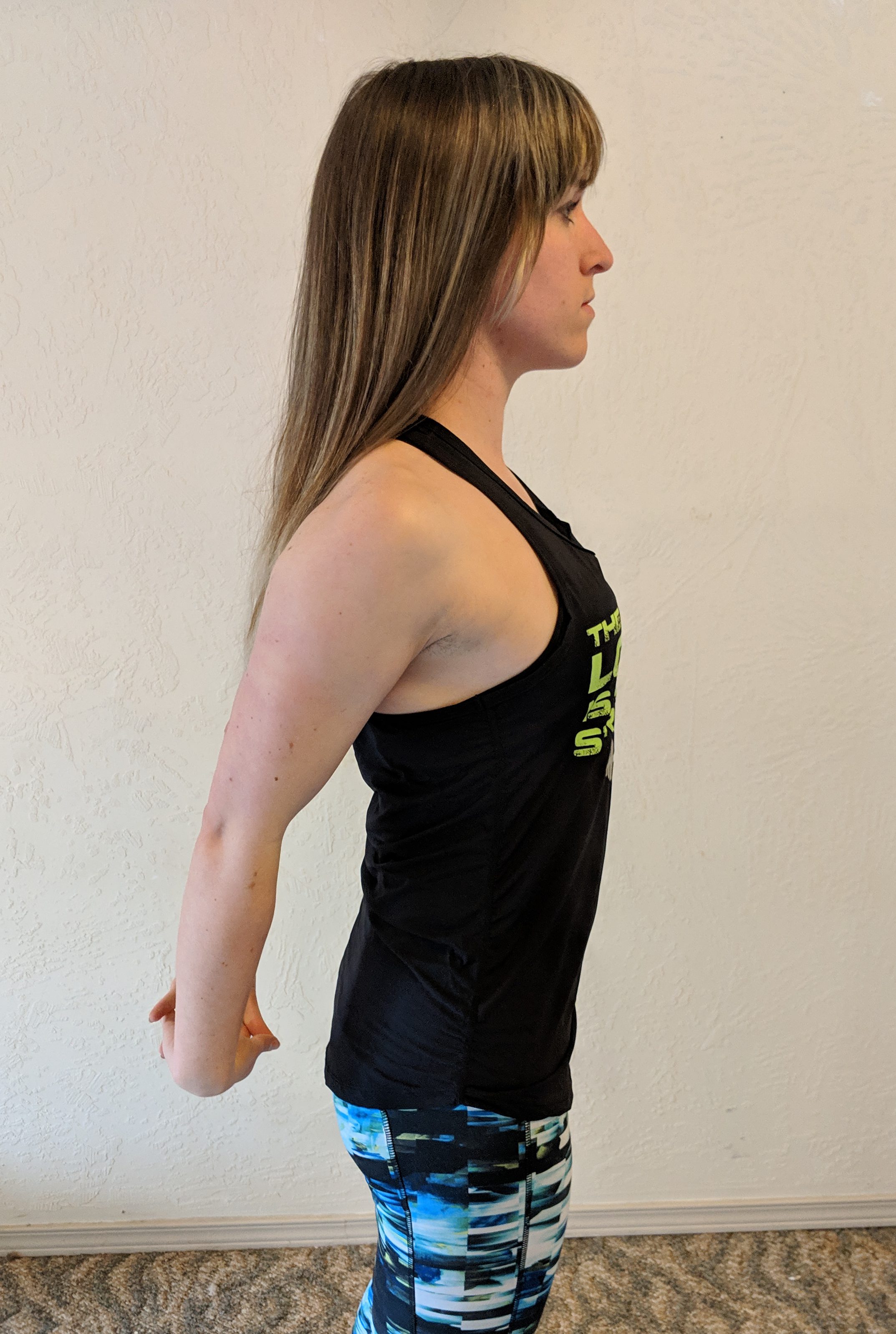
Standing with feet hip-width apart, reach both hands behind you and interlock your fingers. Roll your shoulders back and press down into your fingers. Keep a slight bend in your arms to avoid locking your elbows. You should feel this stretch in your chest. Hold for 30-60 seconds. If you are not able to clasp your fingers together behind you, you can press your arm against a tree or wall behind you to stretch it.
And that’s it! Four simple stretches to help improve your backpacking experience. Consistency is key with flexibility – try to do these exercises daily (or several times daily, you overachiever, you). It only takes 5 minutes!
When you’re out on the trail, there’s a good chance you’ll be dealing with some unstable or uneven ground. Between sticks, rocks, and roots, there is quite a bit of potential for strained or sore joints. Your knees and hips can run into trouble with instability, but there’s good news. The endurance training plan from my last post will strengthen and stabilize these joints. No need for anything extra – I love an efficient training program! There is another joint, however, that could benefit from a little extra attention.
The most likely victims of instability on the trail are your ankles. Since they allow movement in multiple directions, they are usually less stable and can be susceptible to strains and sprains. On my first overnight backpacking trip, this completely snuck up on me. Fortunately I didn’t sprain my ankle, but carrying my pack and hiking on uneven ground for several miles caused my ankles to be sore for months afterward. In fact, I used some of the exercises below to help regain my ankle stability.
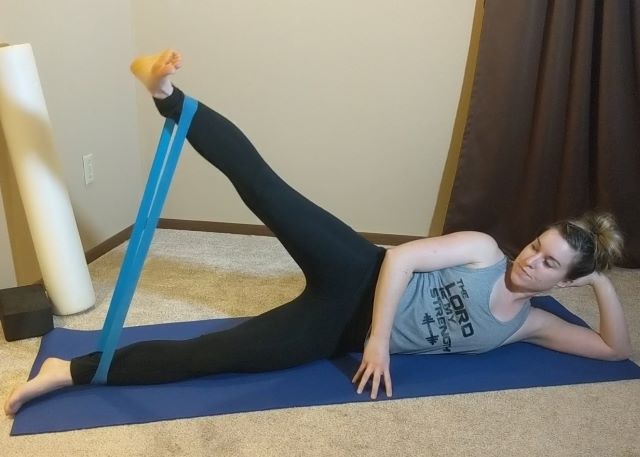
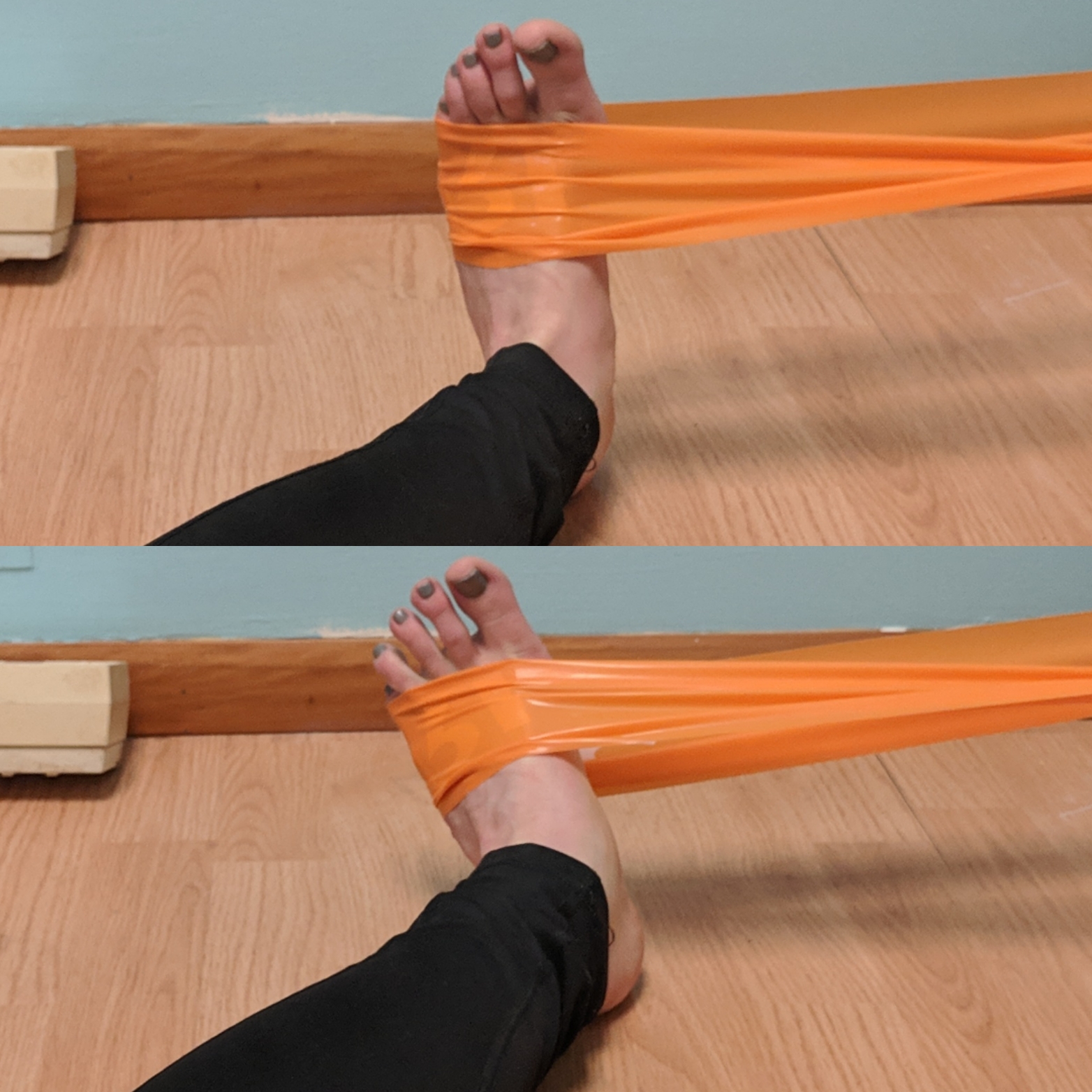
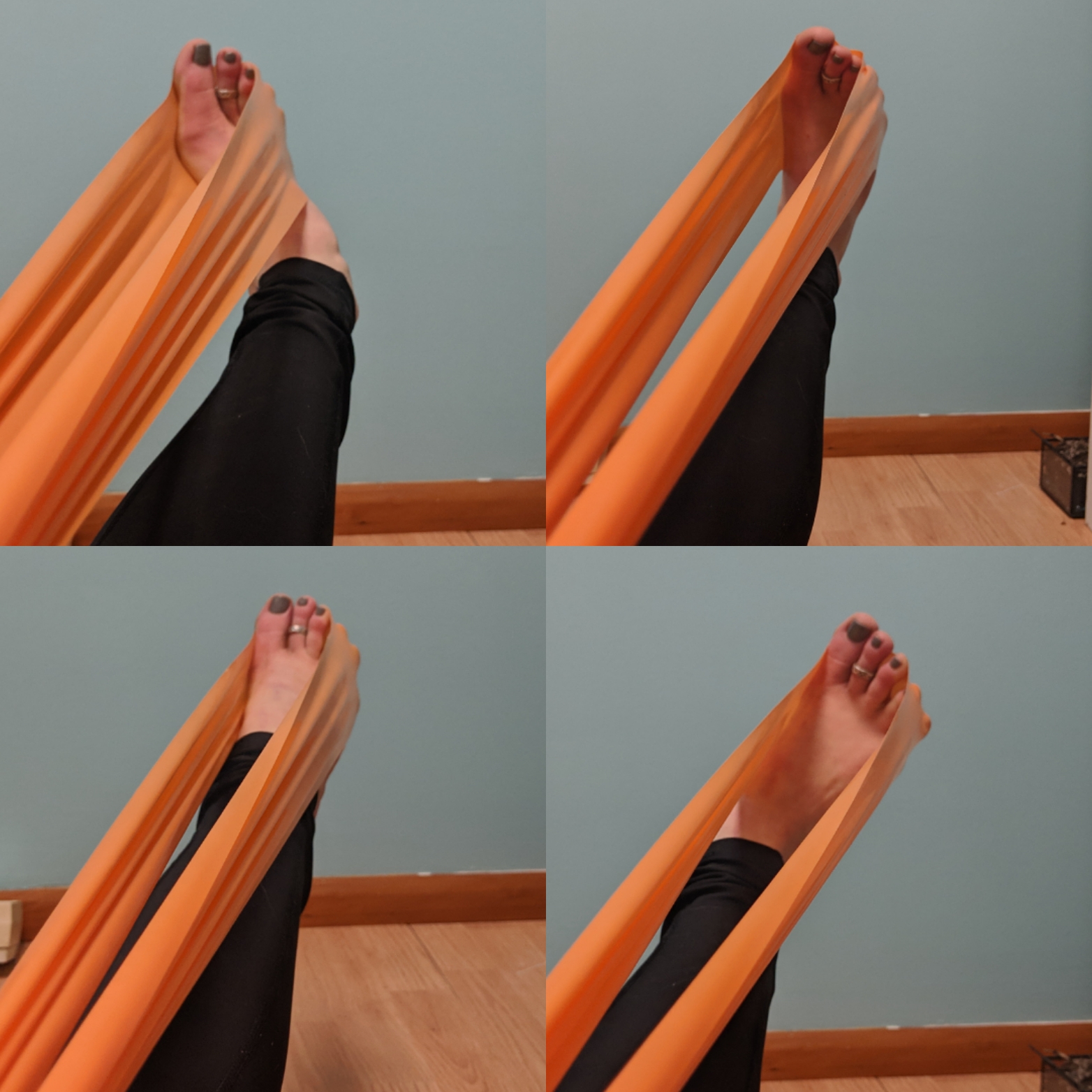
This routine shouldn’t take you any more than 5 minutes. You can do all of the exercises You’ll need a resistance band for this quick ankle routine.
Front-to-Back Stability
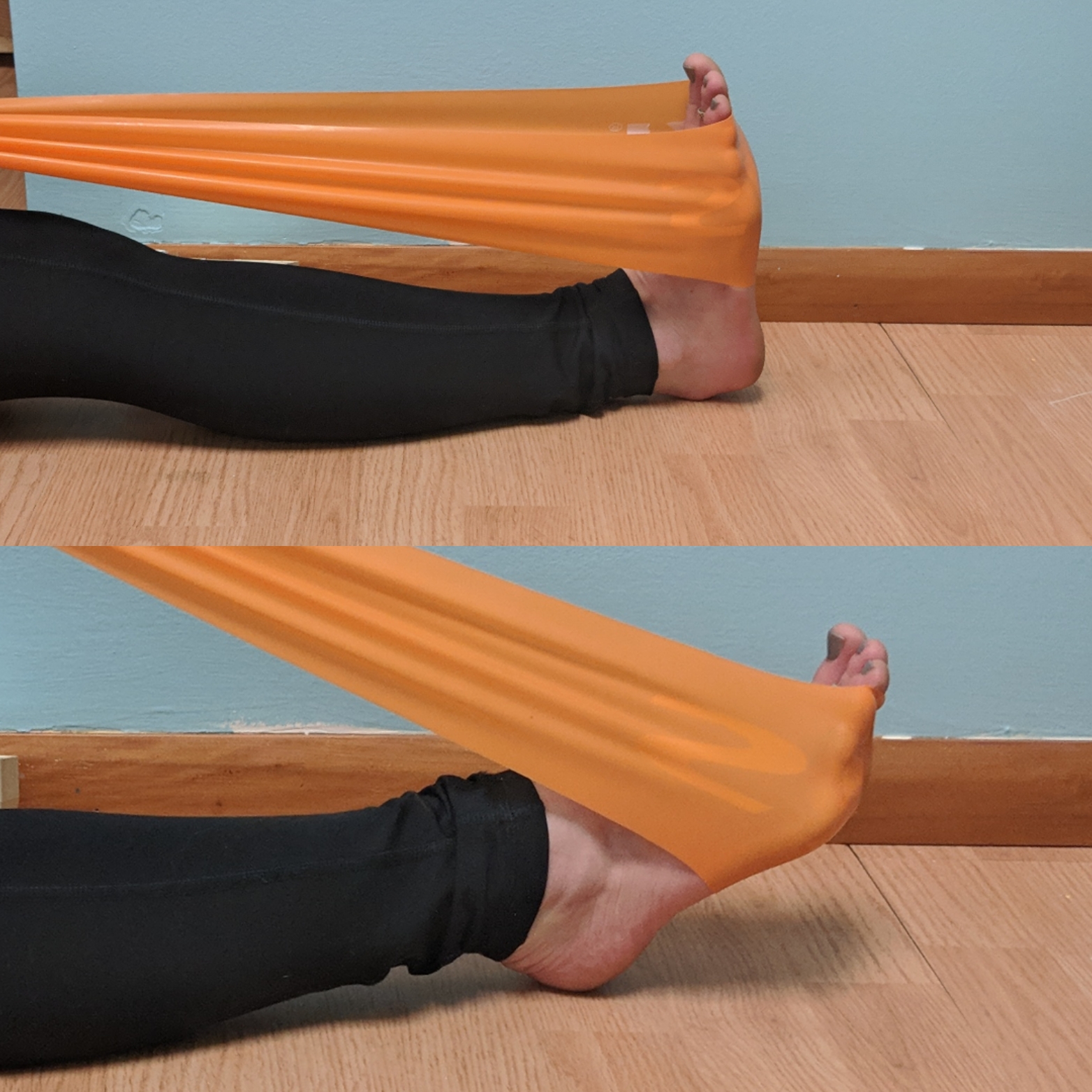
Sit on the floor with your legs straight out in front of you. Hook the resistance band around the ball of your foot and hold the ends of the band in your hands. With controlled movements, slowly press the ball of your foot away from you. Slowly return to the starting position. Repeat this exercise 15 times on each foot.
Left-to-Right Stability
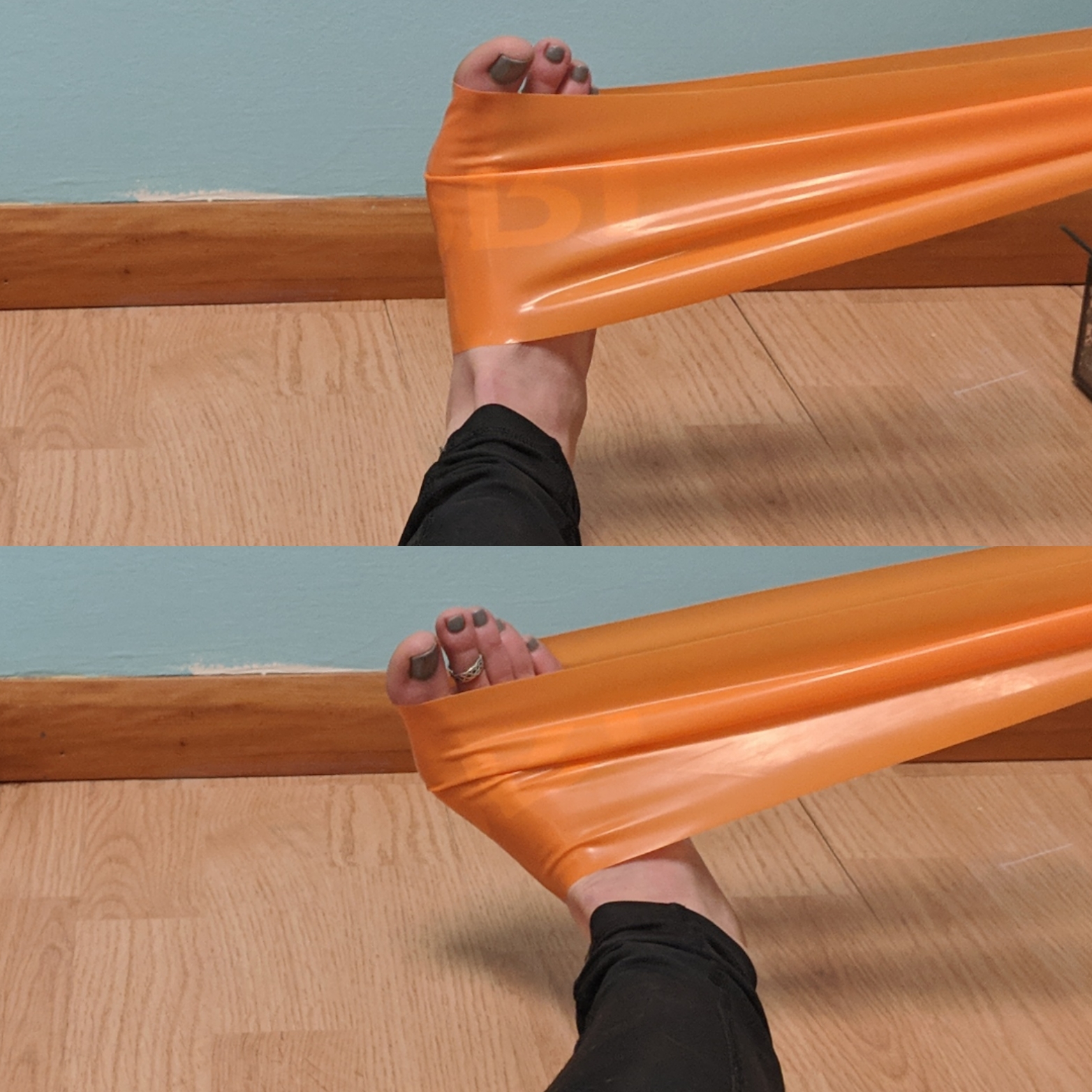
2. Anchor your resistance band around the leg of a heavy table or bookshelf. Sit on the floor with your legs perpendicular to your anchor. Loop the resistance band around the inside edge of the ball of your foot. Keeping your leg still, rotate your ankle to point your toes away from the anchor against the resistance of the band. Slowly return to the starting point. Repeat 15 times on each foot.
3. Repeat this exercise with the band looped around the outside edge of your foot. This time you will rotate your ankle the opposite direction to move your toes away from your anchor.
360-degree Stability
4. Sit on the floor with your legs straight out in front of you. Hook the resistance band around the ball of your foot and hold the ends of the band in your hands. Slowly turn your ankle in a clockwise circle 15 times. Repeat in the other direction. Repeat both directions on the other foot.
You can complete this 5-minute routine anywhere from 2-3 times weekly to 2-3 times daily. The more often you do it, the more stability you can build in your ankles.
In the Pacific Northwest, we are finally getting our first glimpses of Spring sunshine (between uncharacteristic snow flurries). The combination of cabin fever and warm, bright sunshine makes me antsy to get outside again. Hiking and backpacking are common and beloved activities in this area (and many others), but the beginning of the hiking season can be difficult and sometimes risky. Both beginning and seasoned hikers, having been cooped up all winter, may experience fatigue and muscle soreness and are at increased risk of injury if their muscles aren’t prepared for the activity.
I decided to spend these last few weeks of cold weather prepping myself to safely and confidently hit the trail. I’m putting together a training guide for you to follow along. There are a handful of areas to train to be in your best shape for hiking/backpacking – even beginners can benefit. In this series, we’ll cover:
Endurance
Hiking and backpacking can be major endurance exercises, depending on the elevation and length of the hike as well as the weight you are carrying. We will discuss how to train based on these factors so that you can experience the beauty of nature without fire in your lungs.
Joint Stability
This is a big one and it can be easy to miss. I know it caught me off-guard on my first overnight backpacking trip! Carrying a pack is an extra challenge on all of your weight-bearing joints, but consider the added challenge of roots, rocks, and unstable trail and you’ve got a recipe for sore or sprained ankles. I’ll address how to best prepare your joints to effectively prevent injuries.
Flexibility
It certainly doesn’t take a gymnast or a yoga master to hike. If you can walk, you can hike! That said, loosening up tight muscles can make hiking much easier and prevent strained muscles. On top of that, some more advanced trails contain creeks/rivers, large logs, and other obstacles that are much more easily tackled with a little flexibility.
I’ll probably toss in some bonus tips for on-the-trail nutrition as well. Check back soon for the nitty-gritty on training for fun, safe hiking and backpacking!
Sometimes starting a new exercise plan is overwhelming. One nice thing about being more active is that you have a lot of options, but that can also be a struggle. Many people are confused about what types of exercises they “should” do and how they should do them. This post will give you some tips on selecting exercises and making a sustainable (and dare I say, enjoyable?) exercise plan.
Keep in mind that any new exercise plan should be approved by your doctor, particularly if you have any chronic diseases or injuries. Use this form to guide you as you plan to safely increase your physical activity.
What are your goals?
Ultimately the exercises that you choose should be guided by your health goals. While being physically active is beneficial for overall health, choosing the most appropriate and specific exercises will help you achieve your goals most efficiently.
Weight Loss – Start out any new weight loss plan by focusing on simply moving more than you move now. Once that becomes a habit, then increase the cardiovascular challenge by spending more time with your heart rate up. Finally, add in strength training to build muscle mass. This extra muscle will use up energy, increasing your metabolism.
Endurance – To increase your endurance, start by gradually increasing the amount of time you spend with your heart rate up. In this case, you’re not looking for very intense exercise, but a moderate challenge that you can sustain for longer and longer bouts of time as you train. Then add in strength training, focusing on more repetitions (10+) and lower weights.
Strength – Begin by focusing on your form – ask a trainer or friend (or watch in the mirror) to ensure you are performing the exercises safely and effectively. Gradually increase the difficulty, focusing on fewer repetitions (6-8) and higher weights. Focus on muscle balance – if you train one side of your body (for example, your chest), you must also train the other (your upper back, in this case). If you train biceps, be sure to also train triceps. This helps to protect your joints from imbalances that can lead to injury. Make sure to incorporate the recommendations for flexibility into any strength training plan as well.
Improved digestion – Yes, physical activity can improve digestion! Moderate cardiovascular exercise can improve circulation to your intestines, helping your body break down and absorb food more efficiently. Another significant factor is stress – stress can wreak havoc on digestion! Consistently performing stress-reducing activities like prayer, yoga, Tai Chi, or meditation can play a huge role in improving digestion.
Improved health markers (blood sugar, blood pressure, cholesterol, etc.) – While it varies based on which lab values you’re targeting, most are improved with combinations of cardio and strength training, even without weight loss; however, reducing excess body weight is linked with improvements in blood sugar, cholesterol, and blood pressure.
Flexibility – This is a great goal if you’re wanting to improve or maintain movement in your joints and prevent injuries. Anyone can benefit from maintaining flexibility. The key here is consistency. Stretch your muscles and joints regularly. Whether you use yoga, standing stretches, or wall stretches doesn’t matter as long as you are gentle and consistent.
Enjoyability
This is so, so important to an exercise program. If you detest doing a certain type of exercise, do not plan on or expect that you will do it consistently. That is a great way to set yourself up to either quit or be miserable. Bear in mind that the first few weeks of any exercise program will be difficult since you are not yet trained for the exercise, but I’m not referring to difficulty here. I’m talking about enjoyability – if you hate to dance, don’t join a Zumba class. If you can’t stand being on a cardio machine, don’t commit to a treadmill. Find methods of exercise that you actually enjoy.
Sometimes that looks like building a little more intensity into the movements you do in everyday life. For example, if you love to garden and be outside, use a push mower, shovel by hand, or cut your own firewood. If you like to watch television, ride a stationary bike while you do or – one of my personal faves – take a drinking game designed for the show you’re binge-watching and exchange the shots for exercises. These tasks will incorporate fitness into aspects of your life that you do enjoy.
Accessibility
Ask yourself a few questions: Do you have the equipment or space to do this activity? Will you need a gym membership? Is there a realistic time in your day to set aside to do this?
If the basic logistics aren’t there, find something more accessible. If all else fails, there are hundreds of workout videos on Youtube for any type of workout you can think of. No fees, no membership, no travel, and no need for fancy exercise clothes (unless you want them).
Taking all three of these factors into account can help make sure that your exercise program gets you where you’re trying to go in the most enjoyable way that is realistic for your life. Fitness isn’t always fun and there aren’t too many people who are super jazzed to do their workout every day always, but a little thought and planning on the front end can make a huge difference in the long run. If you find yourself stuck or confused, find yourself a certified fitness professional to help you out. Finding a way to make it work is worth it!
Bacteria aren’t always bad! In fact, your digestive tract is loaded with colonies of these little guys. While some can be harmful, most are helpful. Having a good balance of bacteria in your intestines (aka gut bacteria) can be a critical piece of your overall health puzzle.
Less than ideal gut bacteria have been linked to depression, anxiety, overeating, food cravings, brain fog, fatigue, diabetes, obesity, cancer, irritable bowel syndrome and intestinal damage, among other issues.1-5 Tending to the needs of the tiny bacterial warriors in your gut can be hugely beneficial to your wellness. Here’s are four groups of foods you can eat to support your gut health:
Probiotic foods
What they do: Probiotic foods contain the good bacteria that can help reinforce the armies in your gut. Different strains of probiotics have been researched for different health benefits. For example, L. plantarum and L. rhamnosus are linked to lower levels of stress hormones and increased amounts of intestinal building blocks.1, 2 L. heleveticus and B. longum improved stress responses in mice.4
How much: Since research into the benefits different strains of probiotics is still in the works, there is no official probiotic recommendation.
How to get them: Foods that are fermented often retain healthful bacteria all the way into your digestive system. Fermented foods like yogurt, kombucha, miso, sauerkraut, and kimchi all contain healthful probiotics.
Vitamins A and D
What they do: Both of these vitamins are linked to improved intestinal and mental health.1
How much: For vitamin A, men should aim for 900 mcg and women 700 mcg per day. For vitamin D, aim for 600 IUs per day unless you’re over 70, then boost that to 800 IU daily.*
How to get them: Boost vitamin A intake with a serving of sweet potato (1403 mcg), spinach (573 mcg), carrots (459 mcg), cantaloupe (135 mcg), red peppers (117 mcg), or mango (112 mcg).
We get vitamin D primarily from exposure to sunlight, but if your area lacks that for some or all of the year (heyyyyy Western Washington!), try a serving of salmon (447 IU), canned tuna (154 IU), and dairy or dairy alternatives with added vitamin D (115-125 IU). For many living far from the equator, a vitamin D supplement can be a wise idea, but ask your doctor to check your vitamin D status first.
Omega-3 Fatty Acids
What they do: Supplementation with the omega-3 fatty acids EPA and DHA is linked with improved gut bacteria and reduced anxiety- and depression-related behaviors.4
How much: 1.6 g per day for men, 1.1 g per day for women.*
How to get them: Different forms of omega-3s are absorbed and utilized at different rates. To get the most usable EPA and DHA, eat a serving of salmon (1.5-1.8 g), mackerel (1.0 g), or trout (.84 g). For non-fish-eaters, plant-based sources of omega-3s contain ALA which can be converted to EPA and DHA, but only about 15% of the ALA is converted. These ALA sources include a serving of chia seeds (5.06 g), flax seeds (2.35 g), black walnuts (.76 g), and edamame (.28 g). If you aren’t likely to meet recommendations with food, a daily omega-3 supplement can back you up. Be sure to choose one that is “burpless” or “enteric coated” to avoid fishy-smelling breath.
Prebiotic Fibers
What they do: “Prebiotic fibers” are specific types of fiber that the bacteria in your gut like to snack on. Keeping a healthy colony of good bacteria well-fed can keep your intestinal lining strong and regulate digestion.1, 4-5 For those who already have a bacterial imbalance or a condition like inflammatory bowel disease, some of these can actually worsen symptoms. Talk with your doctor if you have any concerns about your gut health.
How much: There isn’t a specific recommendation for prebiotic fiber intake, but 25-30 grams of fiber covers it for most adults.*
How to get them: Most whole plants foods are good places to find fiber. For prebiotic fibers, go for lentils, kidney beans, apples, currants, dates, figs, and whole grains like wheat, rye, and barley.
*Recommended intakes and food nutrient contents were obtained from National Institutes of Health fact sheets. Children and pregnant or lactating women may have different recommendations.
Bischoff SC, Barbara G, Buurman W, et al. Intestinal permeability – a new target for disease prevention and therapy. BMC Gastroenterol. 2014;14:189. Accessed from: https://bmcgastroenterol.biomedcentral.com/articles/10.1186/s12876-014-0189-7.
Carabotti M, Scirocco A, Maselli MA, et al. The gut-brain axis: interactions between enteric microbiotia, central and enteric nervous systems. Ann Gastroenterol. 2015;28(2):203-209.
Galley JD, Nelson MC, Yu Z, et al. Exposure to a single stressor disrupts the community structure of the colonic mucosa-associated microbiota. BMC Microbiol. 2014;14. Accessed from: https://www.ncbi.nlm.nih.gov/pubmed/25028050/
Foster JA, Rinaman L, Cryan JF. Stress & the gut-brain axis: Regulation by the microbiome. Neurobiol Stress. 2017;7:124-136.
Oriach CS, Robertson RC, Stanton C, et al. Food for thought: The role of nutrition in microbiotia-gut-brain axis. Clin Nutr Exp. 2016;6:25-38.
Diet culture is determined to tell you that you have to be miserable to be healthy.
That couldn’t be more wrong.
Subscribe to learn how to go from a frustrated, restricted dieter to a happy, relaxed relationship with food and fitness. Healthy doesn’t have to be hard!